How to prepare your La Jolla home for wildfire season
Wildfire season in La Jolla peaks September through November, but preparation starts now. Here is the defensible space, roof, vent, and evacuation checklist we use.
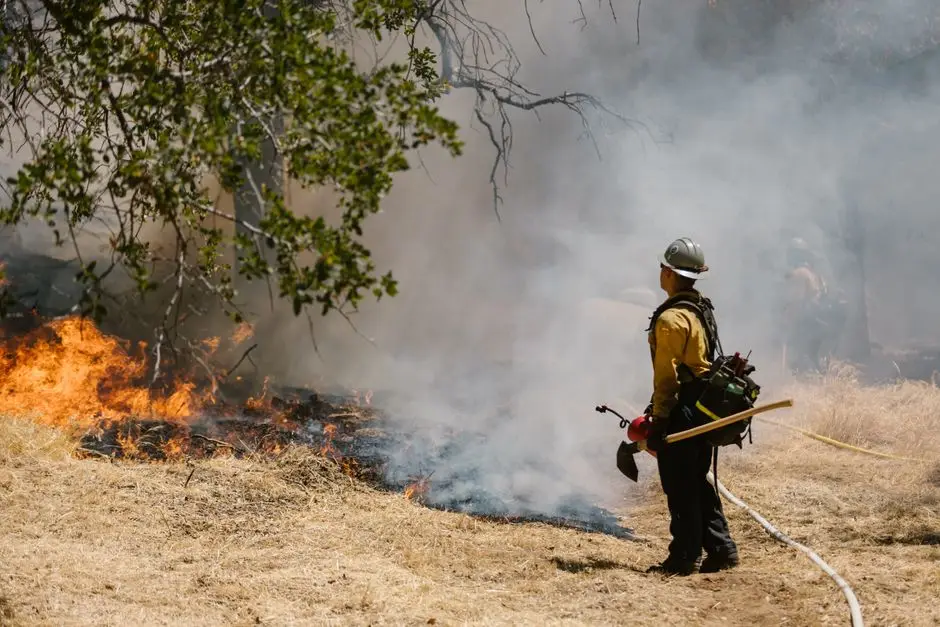
Preparing your La Jolla home for wildfire season means creating 100 feet of defensible space, hardening the roof and vents against embers, and having a written evacuation plan you have actually practiced. Wildfire season here runs roughly May through November, with the worst wind events landing between September and November, so the work you do in late fall protects you the following year. This guide walks through the exact steps we take when we assess a La Jolla property, from Zone 0 ember clearing to the roof materials that survive a wind-driven ember shower.
When is wildfire season in La Jolla, California?
Wildfire season in La Jolla, California peaks from September through November, when Santa Ana winds push hot, dry air from the inland deserts to the coast at 30 to 60 mph. The California Department of Forestry and Fire Protection (CAL FIRE) treats the statewide season as year-round, but the local risk curve is not flat. June through August brings coastal marine layer and higher humidity; the real danger window opens when those winds arrive and relative humidity drops below 15 percent.
La Jolla sits on a coastal bluff, and that geography cuts both ways. The ocean moderates temperature, but the canyons and open space that run from Mount Soledad down toward the village act as chimneys during a wind event. A fire that starts east of Interstate 5 can push embers over the ridge and into neighborhoods like Fire Damage Restoration in Mount Soledad within 20 to 30 minutes. That is not enough time to start clearing brush. It is enough time to execute a plan you already built.
We tell homeowners to treat October as the deadline, not the start date. By the time the first red flag warning is issued, the work should already be done.
What is defensible space in La Jolla California?
Defensible space in La Jolla California is the buffer you create between your home and the vegetation, structures, and combustible materials around it, divided into three zones that extend 100 feet from the structure. California Public Resources Code 4291 and the Office of the State Fire Marshal set the baseline requirements; many La Jolla properties exceed them because of slope and canyon adjacency.
The zones work like this:
- Zone 0 (0-5 feet): The ember-resistant zone. No wood mulch, no bark, no combustible fencing touching the house, no firewood stacked against the wall. Replace mulch with gravel, crushed rock, or concrete within five feet of the foundation.
- Zone 1 (5-30 feet): Lean, clean, and green. Remove dead vegetation, trim trees so the lowest branches are at least 6 feet off the ground, and keep grass mowed to 4 inches or less.
- Zone 2 (30-100 feet): Reduced fuel. Thin shrubs so they are spaced at least twice their height apart, and remove ladder fuels that let fire climb from ground cover into tree canopy.
On a typical 8,000-square-foot La Jolla lot, a full defensible space clearing runs $1,200 to $3,500 in 2026 pricing, depending on slope, access, and how much haul-away is involved. Steep canyon lots in Fire Damage Restoration in La Jolla Farms often land at the top of that range because crews cannot get equipment close to the brush.
One detail most homeowners miss: the first five feet matter more than the next 95. Embers, not flame fronts, ignite the majority of homes in wind-driven fires. A decorative bark bed against the stucco is an ember catcher.
Ember-resistant home upgrades that matter most
Ember-resistant home upgrades that matter most in La Jolla are the roof, the vents, the windows, and the deck, in that order. A wind-driven fire throws embers a mile ahead of the flame front, and those embers find the weakest opening on the structure.
Best wildfire-resistant roofing materials in La Jolla California
Class A roofing is the standard, and it covers asphalt fiberglass composition shingles, concrete tile, clay tile, and metal. The rating is not the whole story. A Class A shingle roof with a deteriorated ridge vent or missing bird stop is still vulnerable. When we inspect, we look at the decking underneath, the condition of the underlayment, and whether the roof-to-wall intersection is sealed.
Replacing a 2,000-square-foot roof with Class A composition shingles runs $18,000 to $28,000 in 2026; concrete tile on the same footprint runs $30,000 to $50,000. If your roof is already Class A and in good condition, spend the money on vents and eaves instead.
Vents, windows, and decks
Vents are the single most overlooked ember entry point. Replace 1/4-inch mesh with 1/8-inch corrosion-resistant mesh on foundation, attic, and eave vents, and use ember-resistant vent covers rated to resist flame impingement. Dual-pane windows with tempered glass on the exterior side hold up far better than single-pane; a window that fails from radiant heat lets fire into the house in under two minutes.
Decks matter too. A wood deck attached to the house is a horizontal fuel bed. If you are not replacing it, clear the underside of debris, enclose the perimeter with 1/8-inch mesh, and keep nothing stored beneath it.
Wildfire evacuation plan for La Jolla California
A wildfire evacuation plan for La Jolla California needs three things: two routes out of your neighborhood, a go-bag per person, and a communication check-in point that is not your house. San Diego County uses the AlertSan Diego notification system and Genasys Protect evacuation zones; register for both and know your zone letter before fire season starts.
La Jolla's street layout creates bottlenecks. The village and Bird Rock have limited north-south egress, and a wind-driven evacuation can gridlock Torrey Pines Road and La Jolla Parkway fast. Drive your primary route and your backup route on a normal day so you know where the choke points are.
Your go-bag should cover 72 hours: medications, phone chargers and a battery bank, copies of insurance and ID documents, a change of clothes, water, and pet supplies. Keep it by the door, not in the garage.
Practice the drill twice a year. Time yourself from the moment you decide to leave to the moment you clear the neighborhood. Under 10 minutes is the target.
Wildfire prep checklist for La Jolla California
This wildfire prep checklist for La Jolla California is the one we hand to homeowners after an assessment. Work it top to bottom in late fall, then re-check the first five items each spring.
- Clear Zone 0 within 5 feet of the foundation: no mulch, no firewood, no combustible fencing.
- Replace vent mesh with 1/8-inch corrosion-resistant screen and install ember-resistant vent covers.
- Inspect the roof for missing shingles, deteriorated flashing, and open ridge vents.
- Trim tree branches to 6 feet of clearance from the ground and 10 feet from the chimney.
- Remove debris from gutters and the roof valleys; one season of eucalyptus leaves is enough fuel.
- Enclose the underside of decks and clear stored items from beneath them.
- Register for AlertSan Diego and know your Genasys Protect zone.
- Build and stage a 72-hour go-bag by the door.
- Photograph every room, closet, and outbuilding for insurance documentation.
- Review your homeowners policy for wildfire coverage and replacement cost limits.
Item nine is the one people skip. A phone full of dated photos is the difference between a smooth claim and a six-month argument with an adjuster.
Common mistakes we see every fall
The most common mistake we see every fall is treating defensible space as a one-time project. Brush grows back. A cleared lot in March is a fuel bed by October. Zone 1 needs re-clearing at least twice a year, and Zone 0 needs a walk-through every month during the season.
Other mistakes that show up on our assessments:
- Clearing the back yard and ignoring the front. Embers do not care which side of the house they land on.
- Storing propane tanks and paint cans against the exterior wall. Move them to a detached shed or the garage.
- Assuming the ocean protects you. Coastal La Jolla homes burn in wind-driven events; the marine layer is not a firebreak.
- Waiting for an evacuation order to pack. By then the roads are already slow.
- Skipping the insurance review. Many policies have separate wildfire deductibles and sublimits that surprise homeowners at claim time.
We also see homeowners spend $40,000 on a new roof while leaving 1/4-inch vent mesh in place. Fix the openings first. The roof only matters if embers cannot get past it.
When to call a professional
Call a professional when the work involves your roof, your vents, or anything above the first story. A defensible space crew can handle brush and limb removal; a roofer or restoration contractor should handle ember-resistant vent retrofits, roof-to-wall sealing, and any repair where a mistake lets embers into the attic.
We also get calls after a near-miss, when a neighbor's fire or a wind-driven ember shower leaves smoke residue and char on the exterior. That is a job for smoke damage restoration in LA JOLLA, California, not a pressure washer and a weekend. Smoke residue is acidic; it etches stucco, corrodes metal fixtures, and works into attic insulation if it is not neutralized quickly.
If you are not sure whether your home is ready, we will walk the property and tell you what to fix first. No charge for the assessment, and we will tell you if the answer is that you are already in good shape.
Frequently Asked Questions
How do I prepare my La Jolla home for wildfire season in California?
Start with 100 feet of defensible space, prioritizing the first 5 feet against the foundation. Then harden the roof, vents, windows, and deck against embers, register for AlertSan Diego, and build a 72-hour go-bag. Do the work by October, before Santa Ana winds arrive.
What is defensible space in La Jolla California?
Defensible space is the 100-foot buffer around your home, split into three zones: 0-5 feet ember-resistant, 5-30 feet lean and green, and 30-100 feet reduced fuel. California Public Resources Code 4291 sets the baseline; canyon-adjacent La Jolla lots often need more.
What roof materials are wildfire-resistant in La Jolla?
Class A roofing is the standard: asphalt fiberglass composition shingles, concrete or clay tile, and metal. Class A composition shingle replacement runs $18,000 to $28,000 for a 2,000-square-foot roof in 2026; concrete tile runs $30,000 to $50,000. The rating only holds if vents and flashing are sealed.
When is wildfire season in La Jolla California?
The local peak runs September through November, when Santa Ana winds push humidity below 15 percent. CAL FIRE treats the statewide season as year-round, so spring is the right time to re-check Zone 0 and vent screens before the fall wind window opens.
Does insurance cover wildfire preparation in La Jolla California?
Standard homeowners policies do not pay for defensible space clearing or ember-resistant upgrades. Some California insurers offer mitigation discounts for documented work, and the California FAIR Plan may credit defensible space. Photograph everything and ask your carrier before you spend.
Get help with Fire Damage Restoration in LA JOLLA
If a wind-driven fire has already touched your property, or you want a professional assessment before the next red flag warning, our team handles Fire Damage Restoration across La Jolla and the surrounding coastal neighborhoods. We assess the damage, secure the structure, and walk you through the insurance documentation from day one. Call (833) 929-6186 to schedule an assessment.